
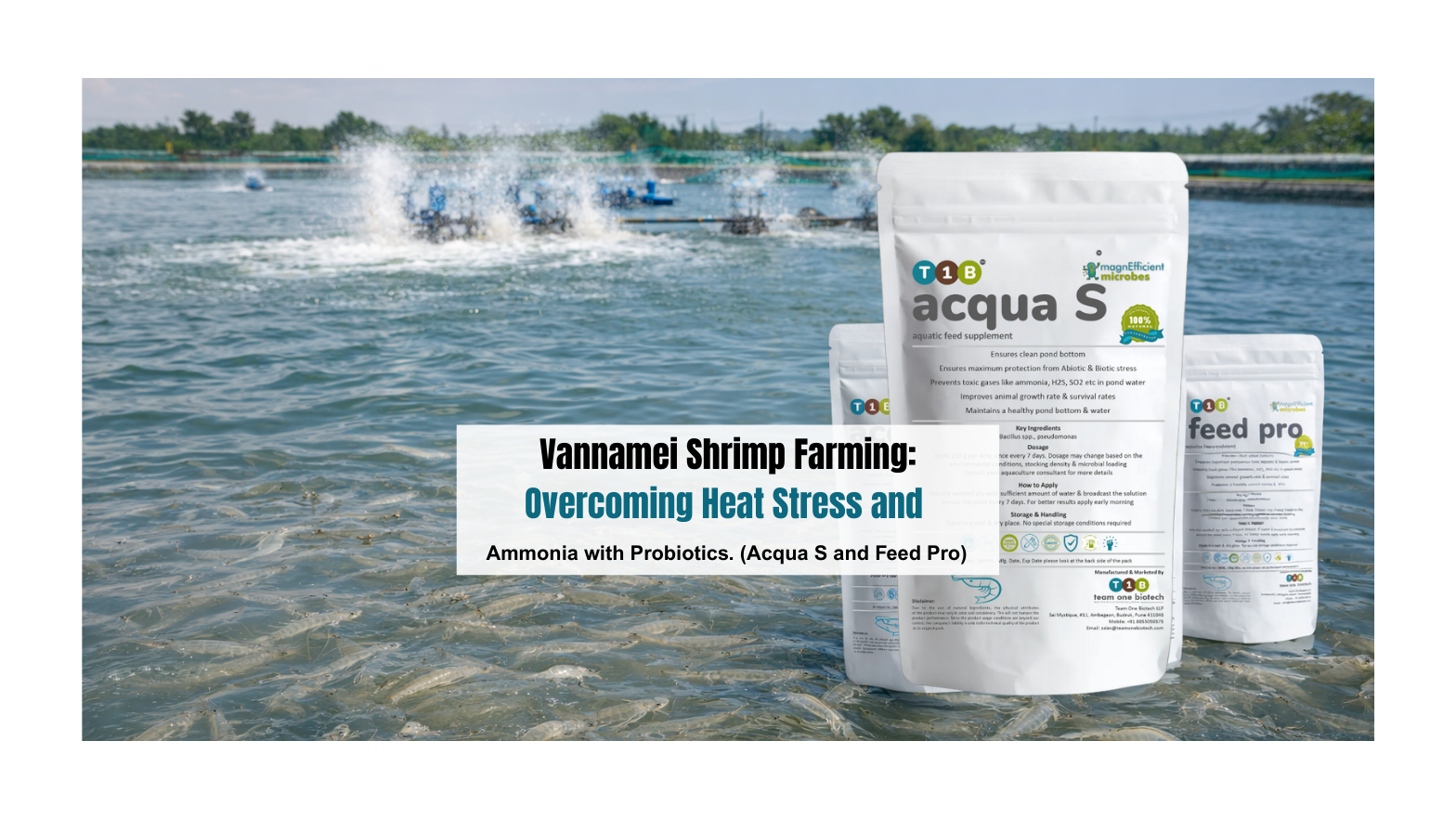

Vannamei Shrimp Farming: Overcoming Heat Stress and Ammonia with Probiotics. (Acqua S, Feed Pro)
The sun rises over the Arabian Gulf, and with it comes a challenge that every aquaculture operator in the UAE knows intimately: unforgiving heat. For commercial Vannamei shrimp farms across the Emirates, summer isn’t just a season, it’s a crucible that tests the resilience of every pond system, every biosecurity protocol, and ultimately, every dirham invested in sustainable protein production.
When water temperatures surge past 32°C and ammonia levels spike in response to metabolic stress, the margin between a profitable harvest and catastrophic mortality becomes razor-thin. In a nation where food security is not merely an economic priority but a strategic imperative enshrined in UAE Vision 2031, the stakes extend far beyond individual farm balance sheets. They touch the very foundation of national resilience.
This is the reality facing aquaculture stakeholders across the GCC: How do we cultivate premium Vannamei shrimp in one of the world’s most climatically challenging environments while advancing the Emirates’ vision of reduced import dependency and enhanced water conservation through cutting-edge, Advanced Probiotic Solutions?
The answer lies in understanding the biological warfare happening beneath the surface of every shrimp pond, and deploying the right microbial allies to win it.
Heat Stress and Ammonia Toxicity in UAE Aquaculture
Understanding the Dual Threat
Vannamei shrimp (Litopenaeus vannamei) have earned their reputation as the world’s most commercially viable crustacean species for good reason. They’re fast-growing, disease-resistant compared to many alternatives, and adaptable to various farming systems. But “adaptable” doesn’t mean invincible, especially when facing the compound environmental pressures unique to Middle Eastern aquaculture.
Heat stress in shrimp manifests as more than simple discomfort. When water temperatures consistently exceed optimal ranges (28-30°C), the physiological cascade is swift and merciless:
- Metabolic rate acceleration: Shrimp consume oxygen at elevated rates, creating hypoxic zones even in well-aerated systems.
- Immune suppression: The cellular defense mechanisms that protect against Vibrio bacteria and viral pathogens become compromised.
- Molting irregularities: Growth cycles become unpredictable, leading to size inconsistency that devastates export marketability.
- Feed conversion deterioration: Stressed shrimp eat less efficiently, driving up production costs while reducing biomass gain.
But heat stress rarely operates in isolation. It triggers a secondary threat that proves even more insidious: ammonia accumulation.
The Nitrogen Cycle Under Siege
In healthy aquaculture systems, beneficial bacteria perform the critical work of bioremediation, converting toxic ammonia (NH₃) excreted by shrimp into less harmful nitrite (NO₂⁻) and eventually nitrate (NO₃⁻). This nitrogen cycle is the invisible foundation of every successful shrimp farm.
Heat disrupts this delicate microbial equilibrium. Elevated temperatures increase ammonia production (stressed shrimp excrete more nitrogenous waste) while simultaneously reducing the water’s oxygen content, the very oxygen that nitrifying bacteria require to function. The result? A toxic buildup that attacks shrimp at the cellular level.
Ammonia toxicity manifests through:
- Gill tissue damage, impairing respiratory efficiency
- Hepatopancreas dysfunction, compromising nutrient absorption and immune function
- Behavioral changes including erratic swimming and surface aggregation
- Increased susceptibility to opportunistic pathogens like Vibrio parahaemolyticus
For UAE farm managers operating intensive or super-intensive systems, particularly those implementing RAS technology to maximize water conservation, the ammonia challenge becomes even more acute. Higher stocking densities mean more metabolic waste in a closed-loop environment where traditional dilution strategies aren’t viable.
The Probiotic Revolution: Engineering Microbial Resilience

The aquaculture industry has long understood that chemical interventions, antibiotics, algaecides, water exchange, offer only temporary relief at unsustainable environmental and economic costs. The paradigm shift toward bioremediation in aquaculture represents not just a technical evolution but a philosophical realignment: working with biological systems rather than against them.
Probiotics in aquaculture function across three critical dimensions that directly address the heat-ammonia nexus facing UAE operations.
Dimension One: Water Column Bioremediation
Acqua S is specifically formulated as water treatment probiotics that establish competitive exclusion against pathogenic bacteria while accelerating nitrogen cycle efficiency. These quality-assured formulations deploy consortia of beneficial microorganisms that:
- Enhance nitrification rates: Specialized Nitrosomonas and Nitrobacter strains convert ammonia to nitrate up to 40% faster than native bacterial populations under heat stress conditions.
- Decompose organic matter: Reducing sludge accumulation and the secondary ammonia release that occurs during detritus breakdown.
- Suppress Vibrio proliferation: By occupying ecological niches and producing natural antimicrobial compounds, probiotics reduce pathogen loads without chemical intervention.
- Improve dissolved oxygen utilization: Certain probiotic strains optimize oxygen distribution at the microscale, benefiting both shrimp and the aerobic bacteria essential for water quality.
For farms using RAS technology, a cornerstone of water conservation aligned with UAE Vision 2031, these water column probiotics become doubly critical. The biofilm development within recirculation systems creates massive surface area for beneficial bacterial colonization, transforming mechanical filters into active bioremediation zones.
Dimension Two: Gut Health and Feed Efficiency
While water quality probiotics address the external environment, Feed Pro tackles the internal battlefield: the shrimp digestive system.
The hepatopancreas, the multifunctional organ serving as liver, pancreas, and gut in crustaceans, bears the brunt of environmental stress. Ammonia exposure compromises its ability to produce digestive enzymes, absorb nutrients, and mount immune responses. Heat stress exacerbates this vulnerability.
Feed Pro‘s gut probiotic formulation delivers top-grade microbial strains directly to the site where they’re needed most:
- Lactobacillus and Bacillus species that colonize the intestinal tract, producing organic acids that lower gut pH and inhibit pathogen adherence.
- Enzyme-producing bacteria that compensate for stress-induced digestive deficiencies, improving feed conversion ratios even under suboptimal conditions.
- Immunostimulant effects that upregulate shrimp immune gene expression, particularly the prophenoloxidase system critical for combating bacterial infections.
In practical terms, farms incorporating Feed Pro into their feeding protocols report measurable improvements in survival rates during peak summer months, the period when ammonia and heat stress typically converge with devastating effect.
Dimension Three: Synergistic Biosecurity Shield
The true power of Team One Biotech’s aquaculture portfolio emerges when Acqua S and Feed Pro are deployed as an integrated system rather than isolated interventions.
The synergy operates through multiple pathways:
- Water probiotics reduce external ammonia load, decreasing the metabolic burden on shrimp and allowing them to allocate more energy toward growth and immune function.
- Healthier shrimp with robust gut microbiomes (courtesy of Feed Pro) excrete less ammonia, creating a positive feedback loop that benefits the entire pond ecosystem.
- The combined microbial communities establish a “biosecurity shield” that makes the farming system inherently more resilient to fluctuations, whether temperature spikes, stocking density adjustments, or feed quality variations.
For commercial operations managing multiple ponds or pursuing export certification requirements, this systematic approach also delivers operational consistency. Probiotic protocols are scalable, measurable, and aligned with international standards for antibiotic-free, sustainable aquaculture production.
Strategic Implementation: Probiotics in the Context of UAE Food Security

The United Arab Emirates’ commitment to achieving 70% food security by 2031 has positioned aquaculture as a strategic pillar alongside vertical farming and alternative proteins. But ambition without execution is merely aspiration.
Sustainable aqua-tech in the UAE context means:
- Maximizing yield per liter of water through RAS and biofloc systems
- Reducing carbon footprint by minimizing imported feed inputs and disease-related waste
- Creating employment in the blue economy sector while reducing reliance on volatile global seafood markets
- Demonstrating to GCC partners that climate-appropriate food production is achievable even in desert environments
Probiotic-based bioremediation directly advances each of these objectives. By keeping shrimp healthier and water systems more stable, farms reduce mortality losses that would otherwise require restocking (importing more post-larvae) and discarding dead biomass. Enhanced feed efficiency means less imported feed per kilogram of harvested shrimp. The reduction in disease pressure eliminates the need for chemical treatments that complicate export certification and environmental compliance.
Moreover, for agri-tech investors evaluating opportunities in the GCC aquaculture sector, farms demonstrating robust probiotic protocols and data-driven environmental management represent significantly de-risked investments. The global shift toward sustainable seafood certification (ASC, BAP) increasingly requires proof of responsible antibiotic use, making probiotic adoption not just best practice but market imperative.
Implementation Protocols: From Science to Pond-Side Application
Understanding the mechanisms is one thing. Deploying probiotics effectively in the harsh reality of UAE summer conditions requires practical protocols.
Acqua S Application for Vannamei and Penaeus Monodon Systems
Dosage considerations:
- Initial inoculation: 2-3 ppm at pond preparation stage, applied 5-7 days before stocking
- Maintenance during culture: 1 ppm weekly, increased to 1.5-2 ppm during heat stress periods (when water temperature exceeds 31°C)
- Emergency intervention: 3-5 ppm when ammonia levels spike above 0.5 ppm
Best practices:
- Apply during early morning or late evening to avoid UV degradation of live bacterial cultures
- Ensure adequate aeration before and during application to support aerobic probiotic activity
- Monitor alkalinity and maintain pH between 7.8-8.2 for optimal bacterial performance
Feed Pro Integration
Feeding protocol:
- Mix Feed Pro with feed at 2-5 grams per kilogram of feed
- Apply coating binder if necessary to prevent probiotic wash-off before consumption
- Increase dosage during post-molt periods when shrimp are most vulnerable to opportunistic infection
Timing strategy:
- Begin supplementation from Day 15 post-stocking when shrimp start consuming formulated feed reliably
- Maintain consistent inclusion throughout culture period, probiotics require continuous presence to maintain gut colonization
Monitoring and Adjustment
Successful probiotic programs are never set-and-forget. They require active monitoring:
- Weekly ammonia testing using reliable colorimetric or electrode methods
- Vibrio counts through agar plate culture, particularly monitoring V. parahaemolyticus and V. harveyi
- Shrimp health indicators: hepatopancreas color, gut fullness, molting frequency, behavioral observations
- Water parameters: temperature, DO, pH, alkalinity, TAN (Total Ammonia Nitrogen), nitrite
When data indicates stress, rising ammonia despite standard probiotic dosing, increased Vibrio counts, or behavioral changes, protocols should be adjusted immediately. The flexibility to respond to real-time conditions separates successful intensive aquaculture from catastrophic failures.
The Competitive Advantage: Why Premium Probiotics Matter
Not all probiotic products deliver equal results. The aquaculture market has been flooded with low-quality formulations that promise microbial miracles but deliver inconsistent or negligible outcomes.
Team One Biotech’s commitment to quality assurance means:
- Strain-level identification and verification: Every bacterial strain is molecularly characterized to ensure consistent functionality.
- Viable cell count guarantees: Products maintain specified CFU (colony-forming unit) concentrations through shelf life when stored properly.
- Contamination-free production: Manufacturing protocols prevent co-contamination with pathogenic strains or competing microorganisms.
- Application-specific formulation: Acqua S, and Feed Pro are not generic rebranding, each is engineered for distinct functions within the aquaculture system.
For commercial farm owners making purchasing decisions, the cost differential between premium and commodity probiotics is negligible when calculated against potential losses. A single disease outbreak or ammonia-induced mortality event can erase an entire culture cycle’s profitability. Investment in proven, quality-assured probiotics is fundamentally risk mitigation.
Optimize your harvest today by partnering with proven bioremediation technology specifically engineered for Middle Eastern aquaculture conditions.
Looking Forward: The Future of Aquaculture in the Emirates
As the UAE continues to position itself as the regional hub for food security innovation, the farms that will thrive are those embracing the convergence of traditional aquaculture wisdom and cutting-edge biotechnology.
Probiotic-based bioremediation represents more than a tool for managing ammonia or reducing Vibrio loads. It embodies a systems thinking approach that recognizes farms as living ecosystems requiring balance, not domination. In environments as challenging as the Arabian Peninsula, this philosophical shift from chemical control to biological partnership isn’t optional, it’s existential.
The commercial operators who integrate Acqua S and Feed Pro into comprehensive farm management systems are not simply improving their survival rates or feed conversion. They’re building climate-resilient operations capable of weathering temperature extremes, contributing to national food security objectives, and demonstrating to international markets that UAE aquaculture produces premium, sustainably farmed shrimp worthy of the highest certifications.
Consult with our UAE specialists to develop a customized probiotic protocol aligned with your specific farm configuration, stocking density, and production goals.
About Team One Biotech: Leaders in Aquaculture Bioremediation
Team One Biotech (T1B) stands at the forefront of the global movement toward sustainable, biologically-driven aquaculture solutions. With extensive research and development focused on the unique environmental challenges facing Middle Eastern and Asian aquaculture operations, T1B delivers not just products but comprehensive biosecurity strategies.
Our portfolio of Acqua S and Feed Pro reflects years of field trials, microbial ecology research, and collaboration with commercial farms across diverse production systems, from traditional earthen ponds to cutting-edge RAS facilities. We understand that every farm faces distinct challenges, and cookie-cutter solutions fail in real-world conditions.
T1B’s commitment extends beyond product delivery. We provide technical support, water quality consulting, and ongoing protocol optimization to ensure that every client achieves measurable improvements in survival, growth, and profitability.
Global Sourcing Made Simple
For aquaculture stakeholders throughout the GCC and international markets, Team One Biotech maintains a comprehensive presence on the T1B Official Alibaba Store. This platform provides:
- Detailed product specifications and application guidelines
- Bulk ordering capabilities for commercial-scale operations
- Transparent pricing and international shipping logistics
- Direct communication channels with our technical support team
Visit the T1B Official Alibaba Store today to explore our complete range of quality-assured aquaculture probiotics, access technical datasheets, and connect with our specialists who understand the specific demands of Vannamei shrimp farming in heat-stressed environments.
The future of sustainable protein production in the UAE is being written today, in every pond where beneficial bacteria replace chemical interventions, where data-driven management replaces guesswork, and where the vision of food security transforms from policy document to harvested reality.
Will your operation be part of this transformation?
Looking to improve your ETP/STP efficiency with the right bioculture?
Talk to our experts at Team One Biotech for customised microbial solutions.
Contact: +91 8855050575
Email: sales@teamonebiotech.com
Visit: www.teamonebiotech.com
Discover More on YouTube – Watch our latest insights & innovations!-
Connect with Us on LinkedIn – Stay updated with expert content & trends!